
 France
 Espagnol
The most beautiful caves to visit during your trip to Vietnam
The most beautiful caves to visit during your trip to Vietnam
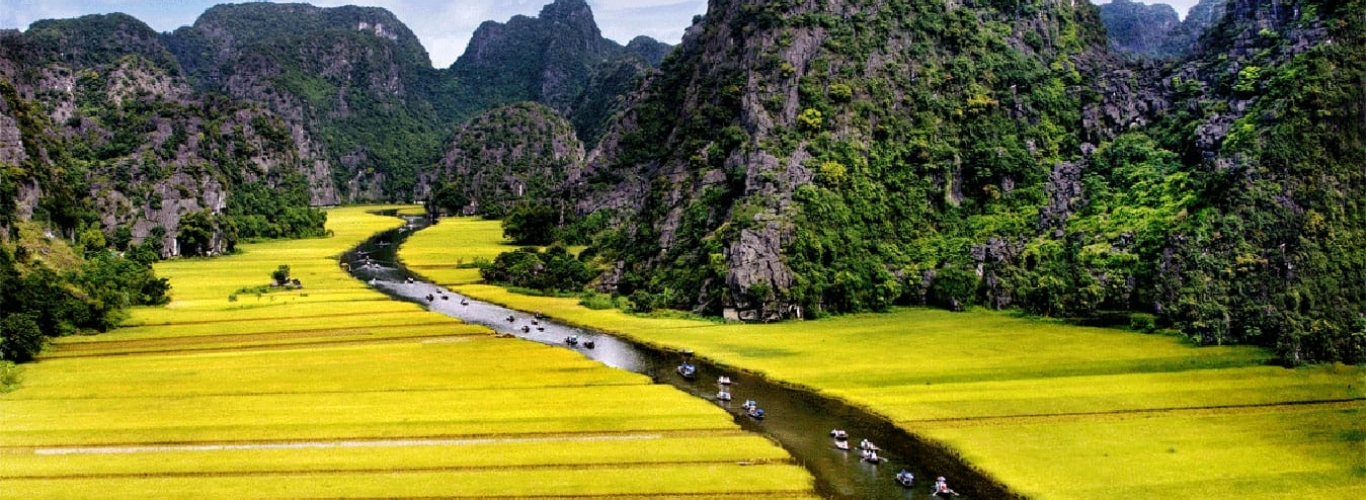
In love with the wonders of nature? You cannot miss visiting the caves of Vietnam during your trip! You will be invited to go underground to admire this impressive spectacle of nature, between exhibitions of sculptures, games of lights, sounds and mysterious legends. Recognized for their geological, archaeological, biological and historical values, the caves of Vietnam will certainly delight your exploratory spirit of the depths.
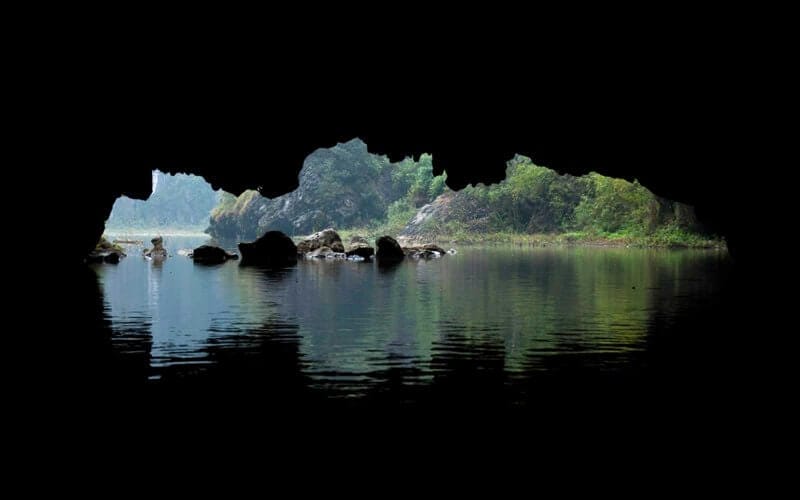
The cave of Nguom Ngao, province of Bac Kan
Discovered in 1921 and opened in 1996, Nguom Ngao cave is considered one of the most beautiful caves in Vietnam. It is located only a few kilometers from the famous waterfall of Ban Gioc in Cao Bang province, bordering China. The name of the cave of Nguom Ngao means in local dialect Tay - ethnic populating the area, "Cave of the Tigers". Once inside, a dream setting appears before your eyes. The rooms follow one another with stalactites and stalagmites, which, with the lighting, reveal their sublime natural sculptures. The visit of the cave could be integrated to your stay in North-East Vietnam, following the visit of the Ha Giang Geological Park and the hike in the Thong Nong Massif. A last rocky stay, before the visit of the Ba Be Lake and the trip to the legendary Halong Bay.
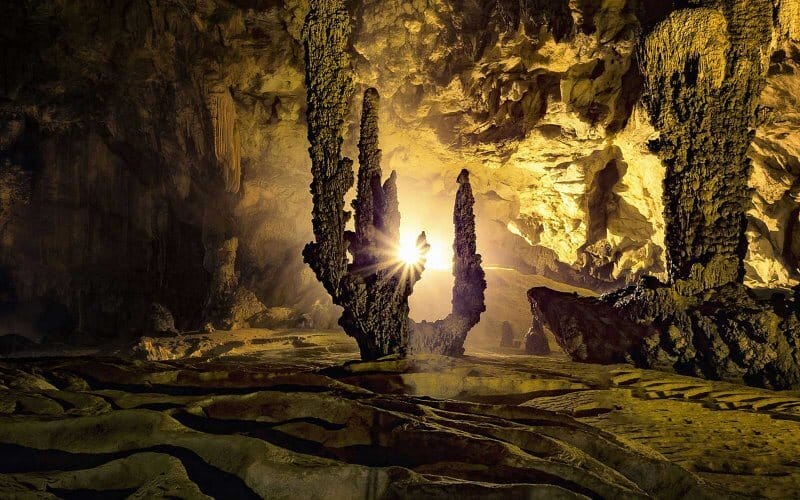
The caves of Ha Long
Halong Bay was listed as a UNESCO World Heritage Site in 1994. Its picturesque landscape surprises any visitor. Admiring the bay from the beach is not enough, it is recommended to make an excursion, to sneak in the creeks and passes, to explore its caves to discover their mysteries.
The rocky islands scattered in Halong Bay are home to a multitude of caves and caves. Most of the most beautiful and large caves are located in the World Heritage area: Thien Cung (Celestial Palace), Dau Go (Woodsticks), Sung Sot (Surprises), Bo Nau (Pelican), Me Cung (Labyrinth) etc. However, some caves located far from the coast are worth visiting: Tien Ong, Hanh and Soi Nhu.
The caves and caverns of Halong have different karst forms: closed, open, suspended or submerged. The caves that can be visited are large cavities (Thien Cung, Me Cung), or submerged (Ba Ham, Luon).
The Halong cave shows are so many, we have fun guessing shapes of the world of the living: sleeping lions, disoriented deer axis, elephants in search of nature. But above all the world of legends: the fairy dance at the heavenly palace, the descending dragon, etc. Free to everyone to interpret his imagination !
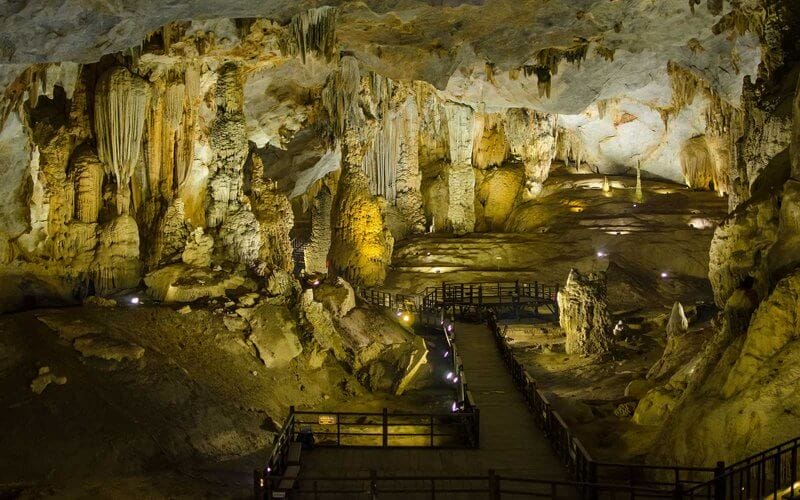
The caves of Phong Nha National Park - Ke Bang
Phong Nha - Ke Bang National Park was recognized as a World Natural Heritage Site by UNESCO in 2003 because of its outstanding and representative examples of the major stages of Earth's history, geological, geomorphological and physiographic processes, as well as than its biodiversity. It is located in a region with fairly high rainfall. However, we see very few rivers on the earth, water seeping and flowing in the limestone reliefs. For tens of millions of years, corrosion has created innumerable caves in the region. The speleological explorations allow to locate hundreds, very diversified and of a rare splendor. Of these, Phong Nha, Tien Son and Son Doong are the best known.
According to the United Kingdom Cave Studies Association, the Phong Nha Cave has a length of more than 7,700 meters. His name means "Wind Teeth". At the end of the 19th century, French Catholic priest Léopold Michel Cadière led an expedition to Phong Nha and proclaimed it "the most beautiful cave in Indochina". Inside, the cave looks like a giant bowl spilled on a huge water space. The water is clear and calm like a mirror. The deeper we enter, the dimmer light, then disappear completely. In the calm atmosphere the sound of the oars on the water resounds and its echo on the walls resembles the sound of gongs or drums. In the cave of Phong Nha are still preserved remains of Cham (manuscripts on walls, altar), and old Viets (statues of Buddha, ceramics, ancestral tablets).
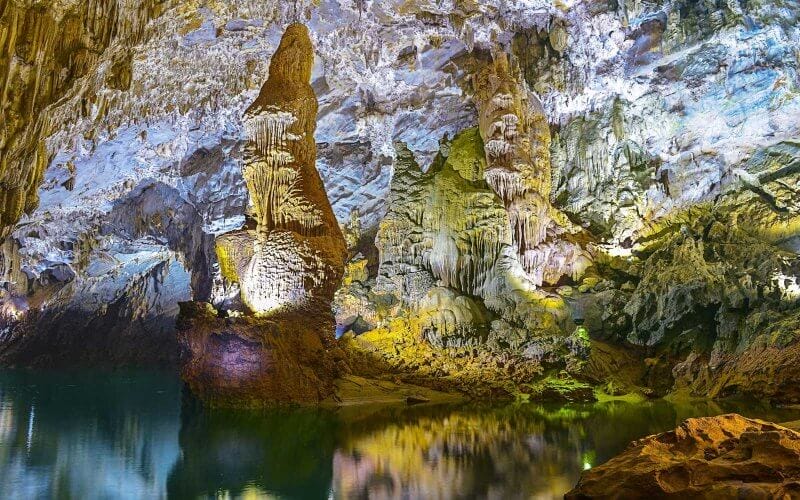
Also known as Dry Cavern, Tien Son Cave is 400 meters from the entrance to Phong Nha, 130 meters above sea level. It was formed tens of millions of years ago, older than Phong Nha. Once in the cave, one has the impression of being in a stone palace composed of spectacular forms that sinks up to 100 meters in a mountain. It can only penetrate to about 400 meters, because then the passage becomes very dangerous.
The cave of Son Doong was discovered in 1991 by Ho Khanh, a resident of the region. His rediscovery in 2010 stunned the world. With its estimated width of about 9 kilometers, Son Doong is simply the largest underground gallery in the world. It is said that one could build a neighborhood of 40-storey high buildings ... His name Son Doong means "Cave of the mountain". Sanctuary protected and extremely sensitive, it is largely limited to the general public. It takes several thousand euros to make a trek of several days. If you are a fan of the natural caves in Vietnam, we will make you discover the most beautiful and mysterious ones during your tours in Vietnam.
Travelers talk about us ...
Found this trip organiser on forums/websites and thank to some very good reviews, my friend and I were looking to discover the Vietnamese's
I was referred by a friend to Mr. Ha Nguyen at Vietnam Original Travel - Hanoi Branch and I’m so very very pleased that I was
We pre-booked a short trip around Northern Vietnam with Vietnam Original tours. They responded very quickly to email and were very helpful
And we are recommended